

One of the most enduring legacies of Roman civilisation is the system of coinage. From the time of the Roman Republic until the fall of the Byzantine Empire, more than a millennium and a half of development led to the foundations of modern monetary systems. Money was not only an economic tool, but also one of the most important forms of power and propaganda.
The beginnings - the age of the Roman Republic
Roman coinage developed around the 3rd century BC, when Rome had already become a major power in Italy. At that time, bronze-based exchange was common, with the value of metal depending on its weight.
The first forms of money were: aes rude, aes signatum and aes grave. These were followed by the minted coins, which were influenced by the Greek cities of southern Italy. The introduction of the denarius system laid the foundation for the Roman economy.
| Currency | Material from | Value relationship | Comment |
| Aureus | Gold | 25 denarius | rare, high value |
| Denarius | silver | 10 as | the basis of the system |
| Quinarius | silver | ½ denarius | small denomination |
| Sestertius | silver/bronze | ¼ denarius | later large bronze coin |
| As | bronze | base unit | everyday money |
| Semis, Triens, Quadrans | bronze | broken units | change |
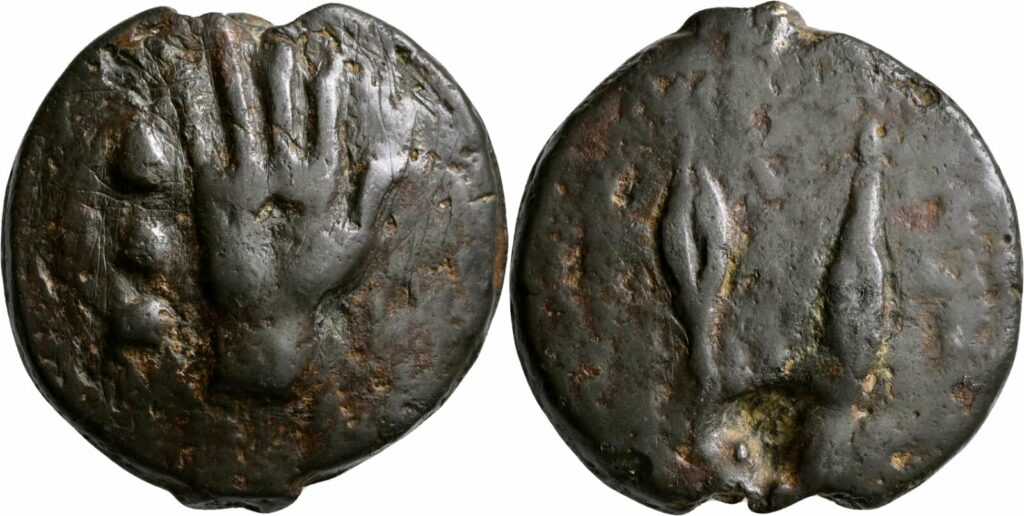
Aes grave i.e.240
Evolution of beating technology
In the beginning, the Romans worked by hand. The metal disc was hammered between two mallets. In the imperial era, they used guide rail beaters to ensure a more precise fit - a forerunner of automated beating.
The imperial mint
Under the Emperor Augustus, the minting of coins came under full state control. The coins bore the portraits, names and titles of the rulers - money became a vehicle for propaganda.
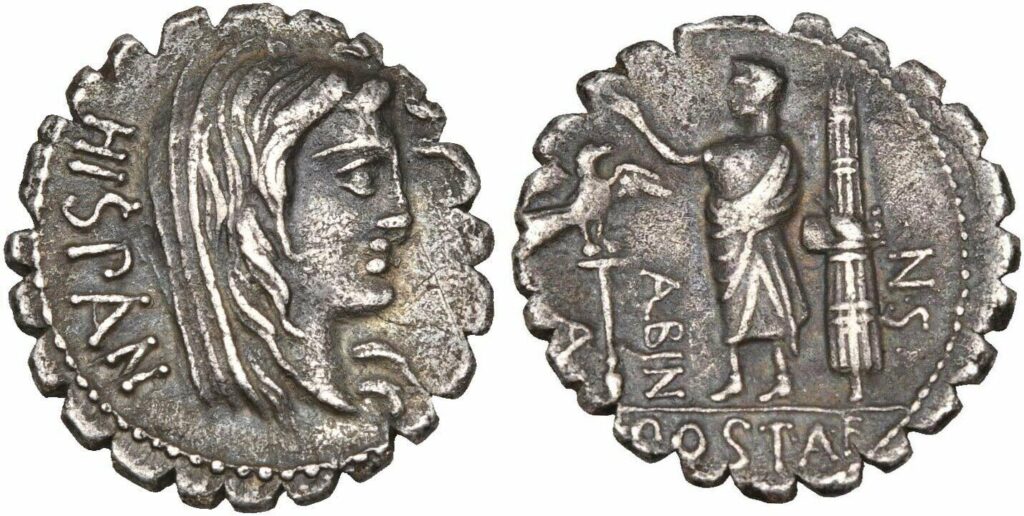
Postumius Albinus denar ie.81.
The late imperial period and the Byzantine mint
The crisis of the 3rd century AD brought the devaluation of silver coins. The denarius was replaced by the antoninianus and then the follis. In the 4th century, Constantine the Great's reform gave birth to the solidus, which remained in use for 700 years. In the Byzantine Empire, there were several important verdes besides Constantinople, such as Thessalonike and Nicomedia.
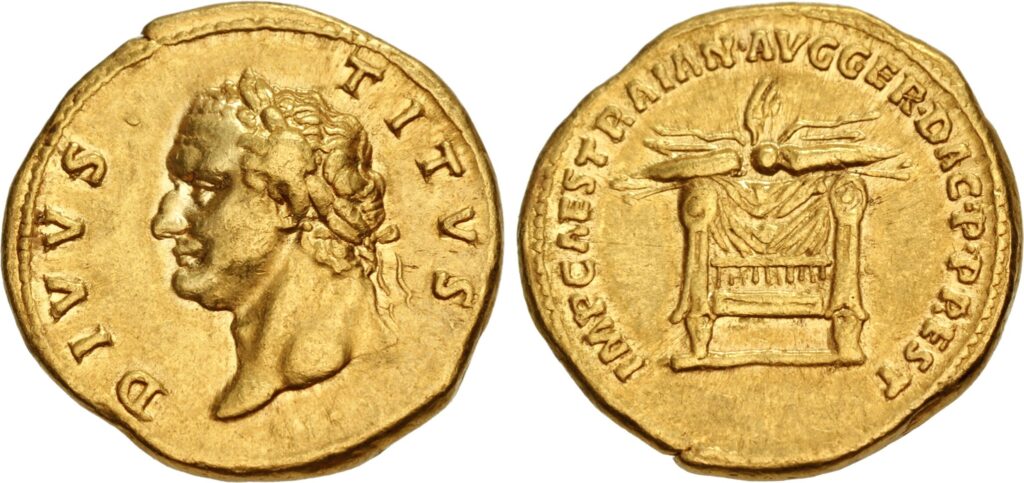
Titus memorial aureus 113.
The importance and legacy of the mint
The Roman and Byzantine coinage was not just an economic activity: it was a political propaganda, an economic stability and an artistic achievement. The Latin word ‘moneta’ comes from the temple of Juno Moneta, where the first Roman mint was located - hence our modern word ‘money’.
Summary
From the bronze aes rude to the Byzantine solidus, the history of Roman coinage mirrors the development of civilisation. Roman money was at once an economic tool, a work of art and a symbol of power - and remains one of the most fascinating areas of numismatics today.