

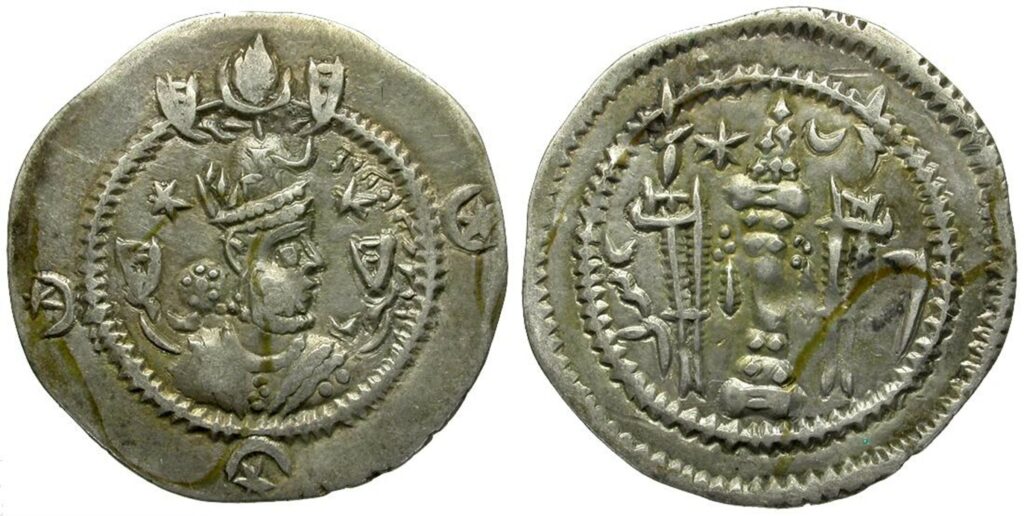
This document provides a complete technical overview for the identification of the drachmas of the Sasanian rulers.
I. Ardasir (224-240)
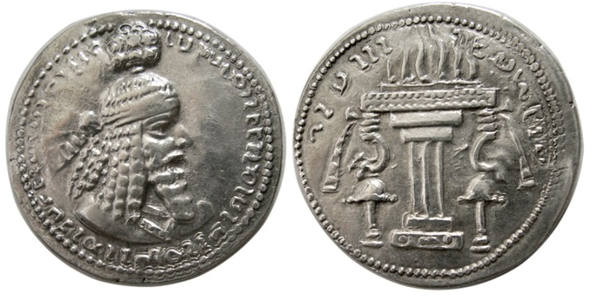
Corona type: tall, stepped/ramped form, with large corymbos on top.
Characteristics: simple, archaic style, few decorations.
Portrait: shorter beard, simple dress.
Back cover: early, simple fire extinguisher type.
Attribute: the simplicity of the crown makes it easily recognisable.
Sappur I (240-272)
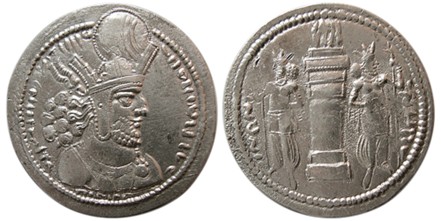
Crown type: muralis (city wall-like) crown with towers.
Characteristics: rim like a rampart, tower-like elements.
Portrait: thick hair, strong beard.
Back cover: fire extinguisher with two attendants.
Attribution: clearly identifiable because of the city wall motif.
Sapphire II (309-379)
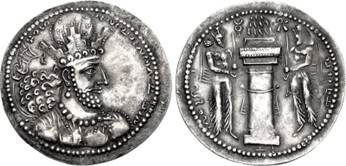
Crown type: tall, ribbed corymbos, often with crescent.
Features: large globe, tall headdress.
Portrait: more youthful or stronger facial versions.
Back: classic altar shape.
Attribute: high korymbos distinguishes it from others.
I. Yazdgird (399-420)
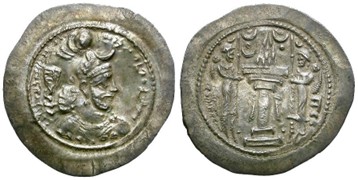
Crown type: diademed, more subdued crown.
Characteristics: finer decoration, few wings.
Portrait: order and proportion.
Back cover: conservative altar type.
Attribute: transitional style between early and winged crowns.
I. Péroz (457-484)
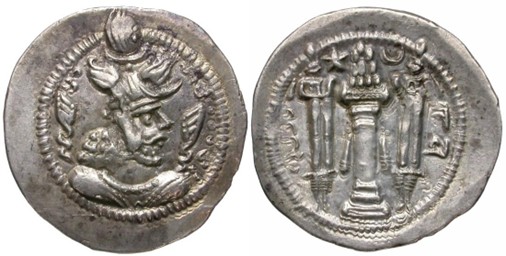
Crown type: early winged crown.
Characteristics: wings, corymbos, occasionally star.
Portrait: strong, powerful appearance.
Back cover: more dynamic composition.
Attribution: early form of the winged crown.
I. Kavada (488-496; 498-531)
Divided into two periods Regency I and Regency II
First regnant:
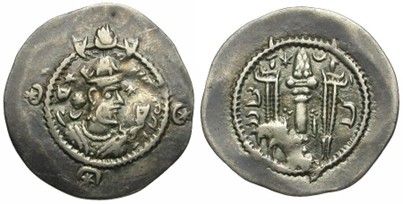
Second Regnation
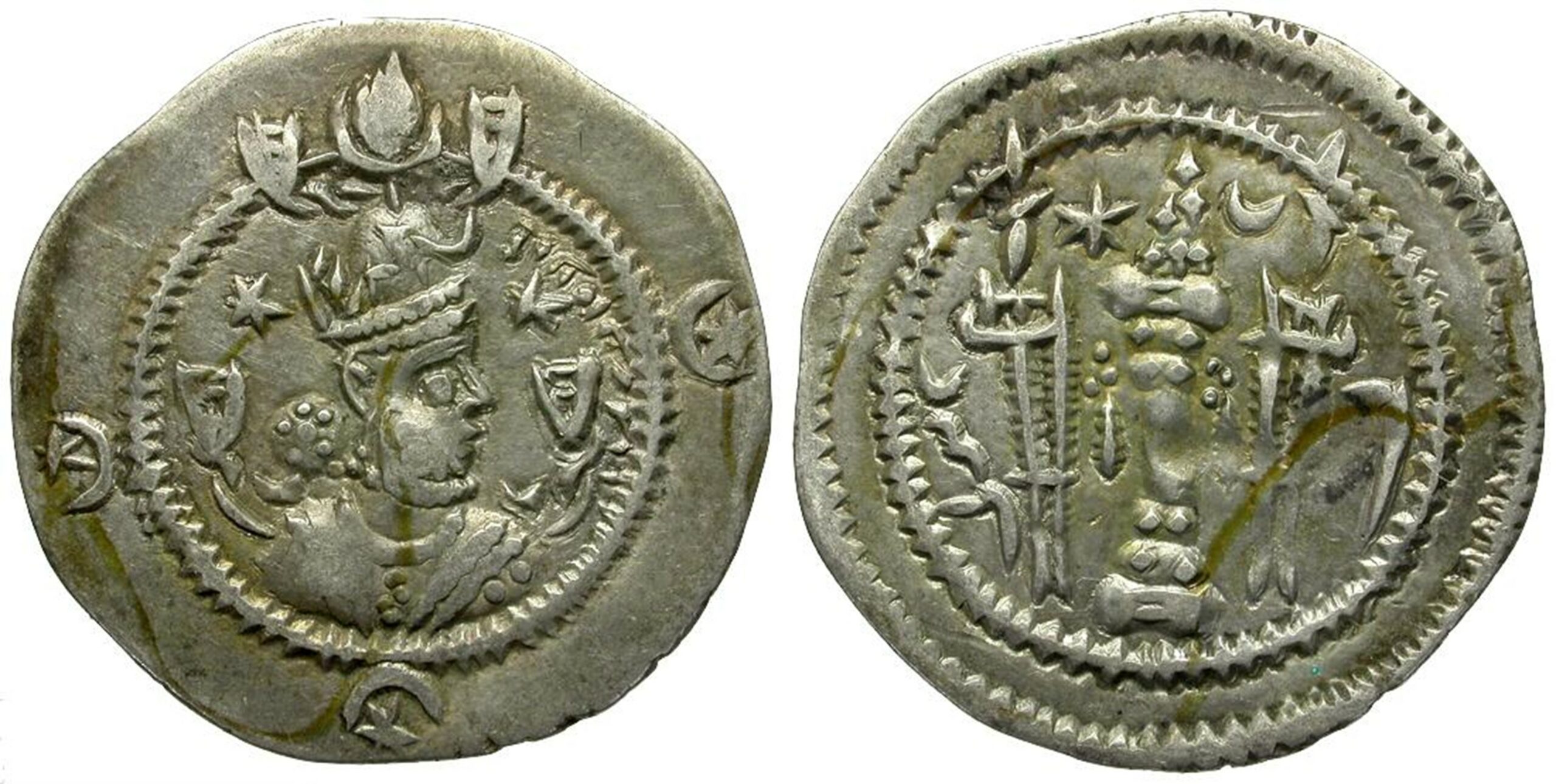
Crown type: winged crown with star/crescent elements.
Characteristics: more ornate wings, longer beard.
Portrait: elongated face, detailed armour.
Back cover: richly detailed altar-form.
Attribution: transition between Péroz and Huszrau.
I. Khusro (531-579)
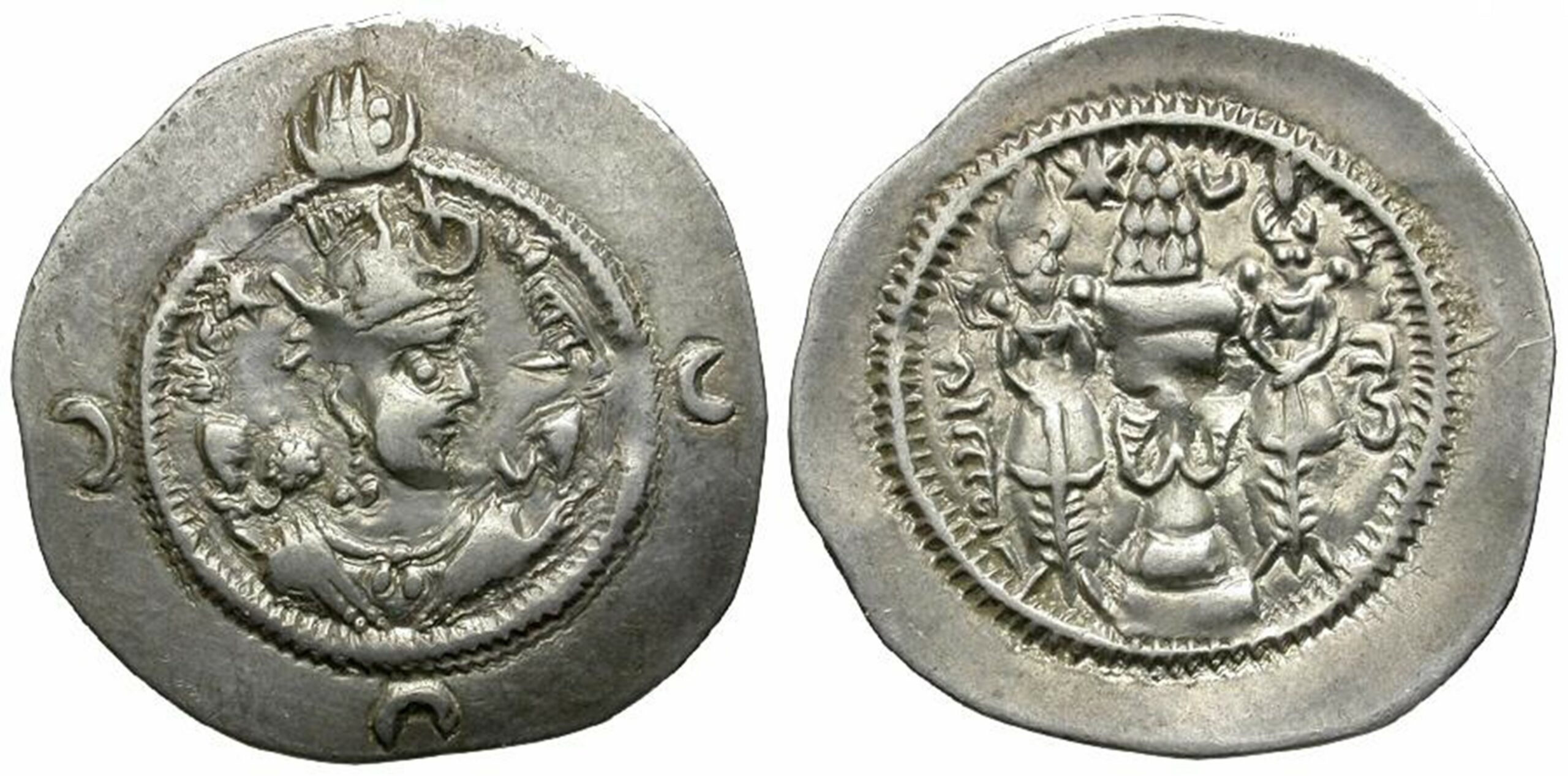
Crown type: large winged crown with star and crescent.
Features: rich beading, complex decoration.
Portrait: very detailed.
Back cover: an exceptionally fine altar.
Attribute: the pinnacle of Sasanian art.
IV Hormizd (579-590)
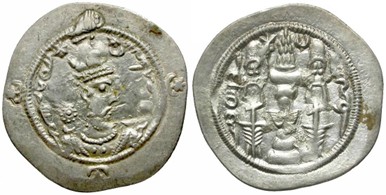
Crown type: winged crown with age symbol.
Distinguishing features: prominent star crescent.
Portrait: Powerful face, rich chest.
Back cover: star/crescent moon is common in the fields.
Attribute: transition between the two Huszrau.
Khusro II (590-628)
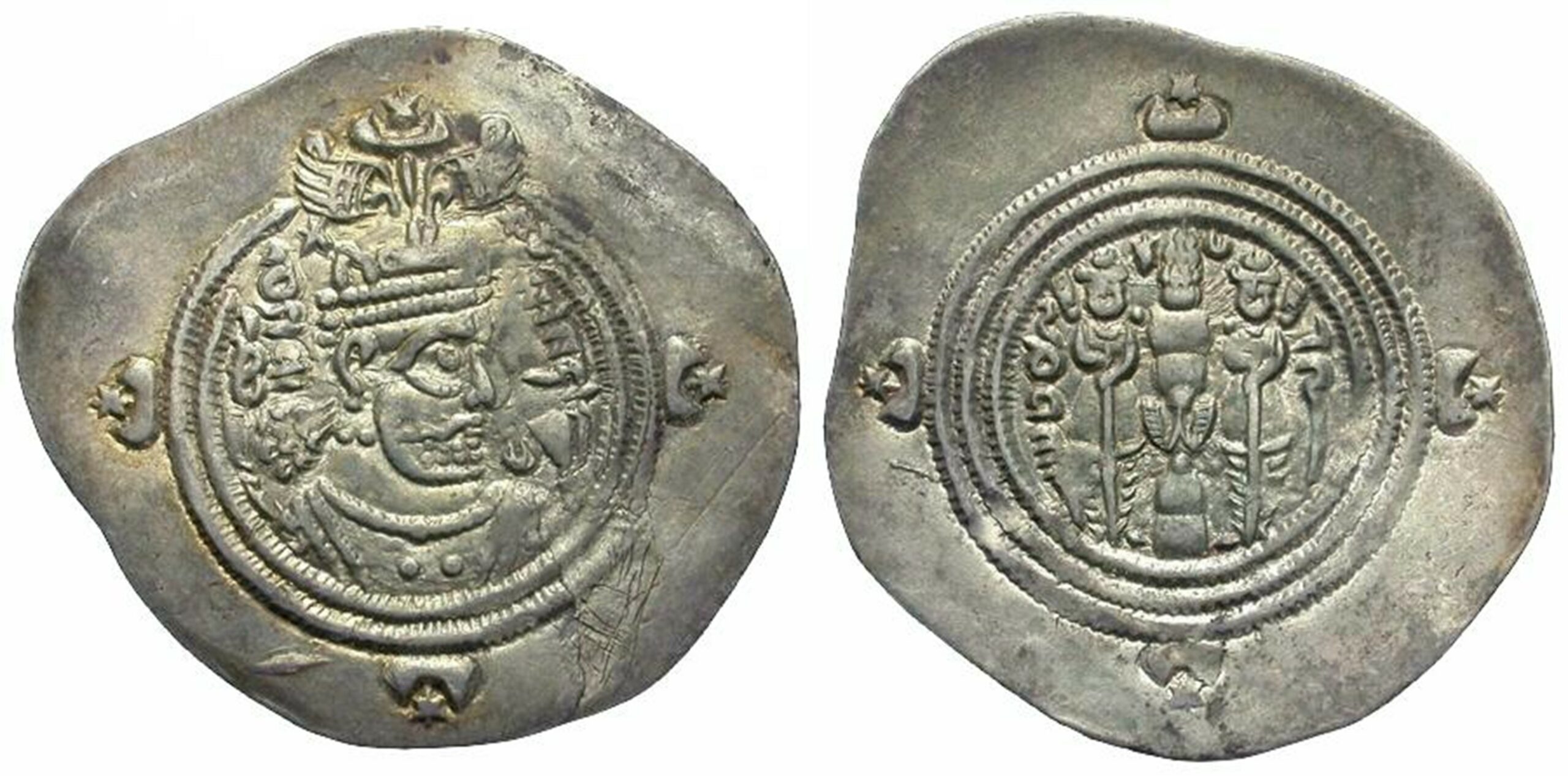
Crown type: the best-known winged crown with a large star crescent.
Characteristics: monumental wings, very ornate.
Portrait: very fine details.
Back cover: stellar-hemisolar subtypes.
Attribute: the most easily recognisable ruler.
III Yazdgird (632-651)
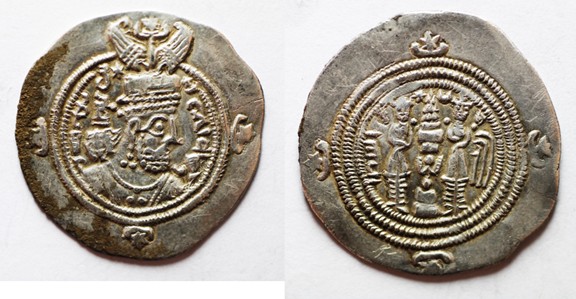
Crown type: narrower wings, fine star-crescent.
Characteristics: portrait suggesting youth.
Back: late style, weaker beating.
Attribute: the last ruler of the empire.
Summary
Crown analysis remains the most effective method of identifying Sasanian drachms. The portrait, mintmark, date and altar details all provide further confirmation, but the shape of the crown alone is almost always sufficient for correct attribution.