
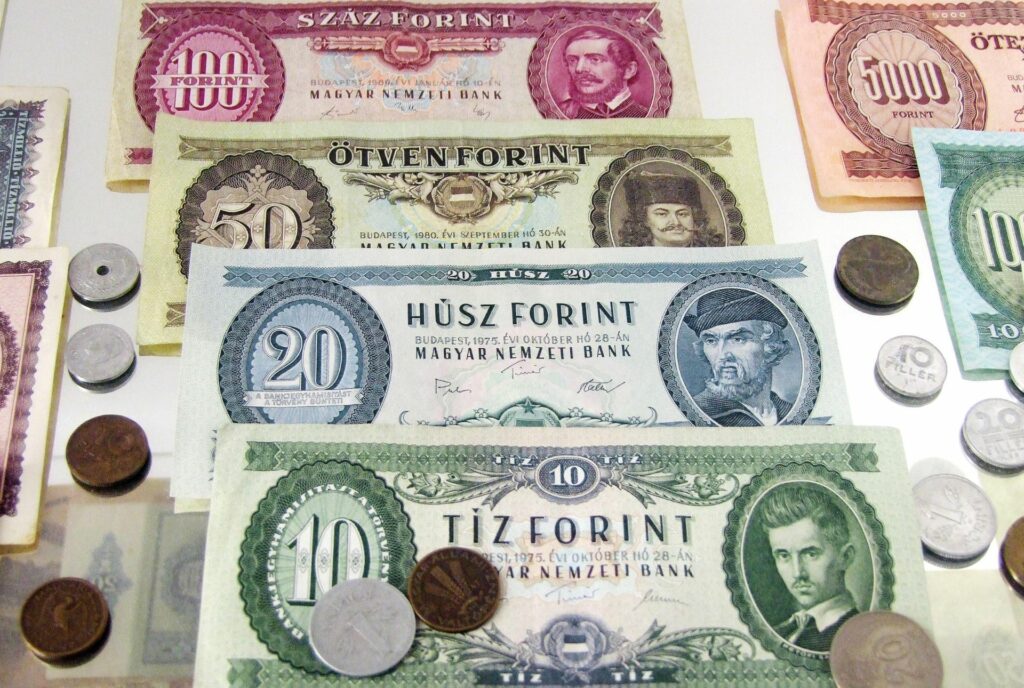
In almost every family, an old coin or piece of paper money is forgotten for years in a drawer or box. The fate of such treasures is often uncertain: are they of any real value? How can we even know at home how much an old coin is worth?
In the course of our work, we are often approached with similar questions, so we would like to give you a short, clear summary of what to look out for.
What to look out for when old money is found? What criteria determine the value?
The very first step is always accurate identification.
The value of all money, whether coin or paper, is fundamentally determined by:ű
- the year of issue,
- the currency,
- the mintmark, if any (indicating the mint of which the coin was minted),
- as well as the condition in which it is.
Determining the condition does not necessarily require professional tools.
You can take a magnifying glass and see how worn the inscription on the coin is, how legible the details are.
On paper coins, check for folds, tears, discolouration, all of which reduce the value. Often there is a tenfold difference between two seemingly identical coins just because of the condition.
If you have several specimens, do not mix them. Separate the different vintages and check for rare varieties. It is worth checking for any coins that appear to be faulty, misprinted or scrap, as such errors can sometimes be worth a lot in the eyes of collectors.
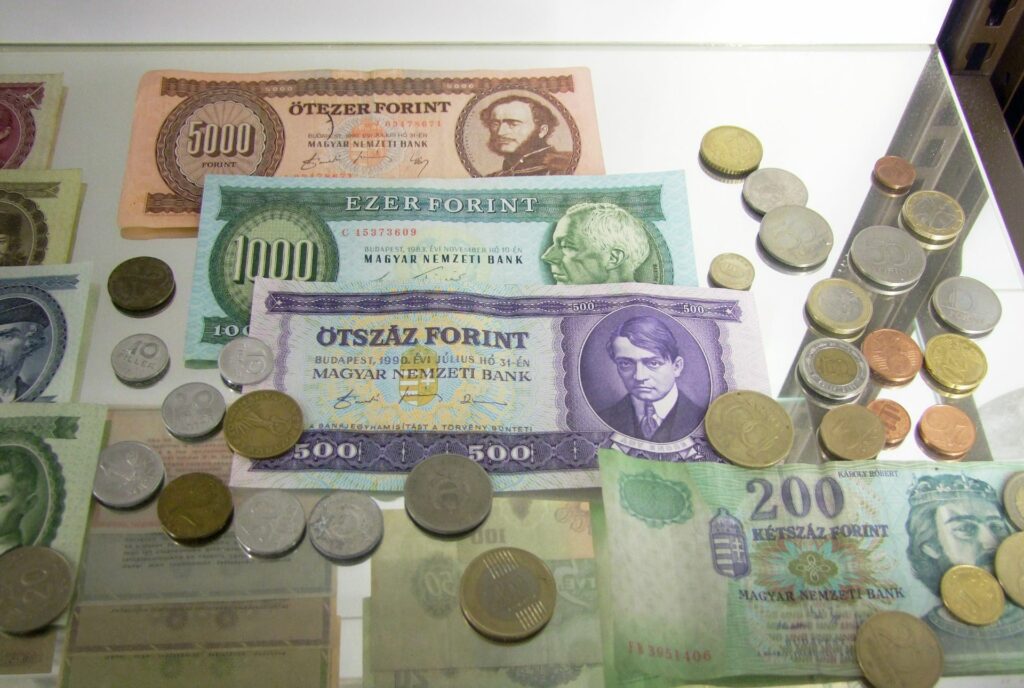
Where and how can we find out how much old money is worth at home?
The internet is always the quickest way to find what you're looking for, but it doesn't always matter how you look.
The first thing you should do is type the year, currency and any mint marks you see on the currency into a search engine.
For example: „100 forint 1983 without mintmark”.
This can immediately throw up auction sites, forums, catalogues where similar items are being sold or valued.
However, it is important to look beyond the sales ads!
The price someone asks is not the same as the price they actually give. Rather, it is worth looking under „closed auctions” or browsing the archives to see what a particular coin or banknote actually sold for.
In Hungary, for example, Darabanth, BÁV and various auction history of online marketplaces can help. They include exact amounts and the condition of the items, giving a more authentic picture of market prices.
Social media can also be effective:
More on Facebook Hungarian numismatic site, where you can request a quick valuation by uploading a photo. Experienced collectors and experts can give advice, tell you which coins might be rare, or confirm if they only have a market value.
Catalogues can also be used: several annual Hungarian numismatic publications update the values year by year, and detailed photographs help with identification. They can also be found in antique shops or libraries.
An offline option could be a numizmatics specialist shop or a pawnbroker. Here, experienced sellers can tell you in a short time if you have something of value, and also if it has no particular market value. If you have some really special money, you may want to simply take it to an auction house where they will give you an official expert opinion.
What not to do and how to preserve the value of old money?
Many people make the mistake of finding old money and then without thinking, start cleaning it, polishing it or even trying to fix the mistakes.
This is the worst thing we can do!
In the case of medals, the patina (the natural oxide layer on the surface) can just add value, but pieces treated with a metal cleaner or a scouring pad are no longer accepted by collectors.
Paper coins should not be glued, but rather placed in flat, acid-free foil to minimise damage.
When storing, keep away from humidity, moisture and direct sunlight; this will preserve the more valuable pieces over the long term. It is also advisable to place banknotes in transparent plastic sheets like bankcard holders and to store coins individually in a separate box.
If you come across something really special, such as a gold or silver coin, a foreign coin not known in Hungarian circulation, or a rare historical banknote, don't sell it on the first offer. Always ask for valuations from several places and, if necessary, ask for an expert opinion.
It is also important to offer old money for sale not by the piece, but as a bundle, i.e. sorted by vintage, series or theme, as this makes collectors more willing to buy and even pay more for it.
When should you sell your old money and what are the pitfalls?
In Hungary, the best prices are usually obtained at auction, especially for more specialised items. In such cases it is worth waiting up to six months for a themed auction.
It is quicker to sell on community marketplaces (such as Vatera, Jófogás), but prices are often lower and fraudsters and fakes are more common.
Before selling, always take detailed, crisp photos and describe everything you know about the money (year, mintmark, condition, special features). This will make buyers more confident and help us to see clearly how much we can ask for it.
If you've got a few old coins at home, a few more special banknotes, or even a whole family collection, it's worth considering what to do with them. Don't make a snap decision, as determining value is not always easy. At Procopius Numismatics, we look at each piece individually, whether it is a single coin or a legacy that has been preserved for generations. The professional background is provided by Péter Molnár, the founder of our company and co-author of the Hungarian Coin Catalogue, so you can be sure that the valuation is always carried out personally and with thorough expertise.
Our buying process is transparent, there are no hidden costs, the offer is always in line with market conditions and payment can be made immediately in cash.
If it's an exceptional rarity, you can also count on us for auction sales, all on extremely favourable terms. We are not just dealers, we are passionate numismatists, so we strive to offer the best possible solution for all our clients.
If you want to find out how much your old money is really worth at home, or are unsure when and where to sell, feel free to contact us We are happy to help you in person, by phone or e-mail.
Frequently asked questions about the value of old coins
Many people contact us saying they have found some old coins or banknotes at home, but don't know what to do with them. The following questions and answers clarify the most common uncertainties - from storage to valuation and sale.
Always check the year, currency, mintmark and condition first. If it is a rare year, has faulty printing or is in excellent condition, it is likely to be more valuable. You can quickly check online and in trade catalogues to see how much it is worth.
Not recommended. For collectors, the natural patina is part of the value. Cleaning, polishing, rubbing deteriorates the condition and can even completely devalue the coin. Rather, leave it in its original form and show it to an expert.
The safest thing to do is to contact a specialist numismatic dealer or auction house. At Procopius Numismatics, we examine each piece individually and give you an expert opinion, either in person or based on a photograph online.
Paper coins should be kept in acid-free foil and coins should be individually bagged in a dry, cool place. Avoid dampness, sunlight and touching with your hands; these can all reduce the value.
For more specialised items, auctions can fetch the highest price, but the process can be time-consuming. If a quick sale is needed, Procopius Numismatics also offers cash purchases at market prices and transparent terms.