

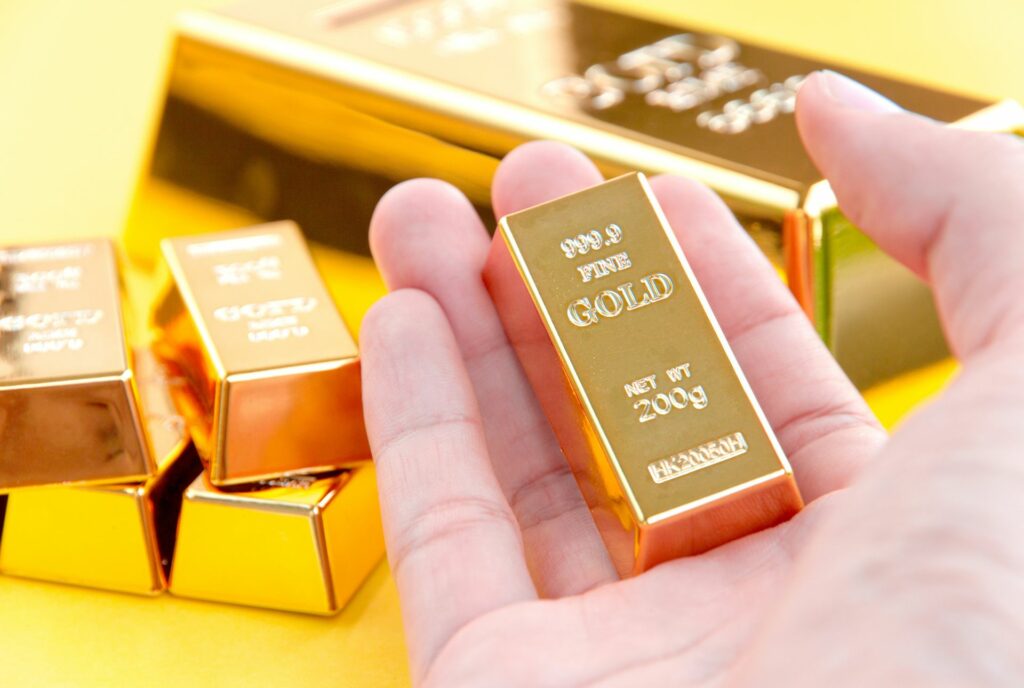
For decades, investing in gold has been a bastion of safety and predictability when looking for a crisis-proof or inflation-proof asset. In 2025, however, the gold market has attracted the attention of even those who rarely think about long-term, real asset-based investments. No wonder, given that we have seen a 40% rise in the price in a matter of months. And the precious metal has not seen this kind of performance, at least at this pace, for decades.
At the beginning of the year, an ounce of gold could be bought for just over 1 million forints, but by mid-September the price had already reached over 1.2 million, and even in dollar terms, historic highs were broken. But is it worth getting in now, can we expect a further rise or is the gold rush over?
Among other things, this is the question we are trying to answer in our current article.
What is driving the gold price now?
The gold market is never driven by a single news or indicator, but is shaped by a series of interacting processes in the global economy.
In the first months of the year, inflation fears, geopolitical uncertainty and uncertainty about the interest rate policies of the major central banks triggered the rally.
With investors playing on the US Federal Reserve's easing, the European economy in turmoil, the war in Ukraine and conflicts flaring up around the world, gold has once again become the top flight asset.
It is also not insignificant that central banks, led by China and India, have been buying gold in record quantities over the past two years, which has meant stable demand and provided a strong base for the market.
The weakening of the dollar was also a key factor.
While at the beginning of the year, one US dollar cost nearly HUF 400, by mid-September the exchange rate had stabilised at around HUF 335.
This meant that the rise in gold prices measured in dollars was felt somewhat less by Hungarian investors who had been calculating in forint, but without the strengthening of the forint, domestic gold prices would have risen even higher.
However, experts have repeatedly warned that when everyone takes refuge in the same device at the same time, there is a risk of overheating and even a bubble.
History has seen gold prices fall sharply. Just think of the crash of the early 1980s, during which the precious metal value fell by nearly 65 percent in a matter of months. This is why long-term investors should look for diversification, i.e. not all savings should be in gold.
However, the fact that central banks continue to buy gold in large quantities is a good reason to invest in gold. Geopolitical uncertainty has not disappeared - just think of Ukraine, the Middle East or the Far East. At the same time, the market is highly sensitive to international monetary policy. A single unexpectedly harsh Fed statement or a sudden increase in risk appetite could easily trigger a major price correction.
Is it realistic to invest in gold now? For whom is it worth it?
The soaring gold price may prompt many to enter the market now.
Before making a decision, however, it is worth considering a few basic aspects.
First of all, never just look at the current exchange rate, but also consider the longer-term trends and the main drivers of market movements.
The gold price is typically cyclical, meaning that it can fluctuate significantly over long periods. Many people tend to buy near the peaks and then falter after a correction, although patient, decade-long thinking is almost always more rewarding.
It is also important to choose the right form of purchase.
Physical gold, be it coins, ingots or plates, is a classic investment and has a tangible value.
However, it does matter where and what grade of gold you buy. Reliable, certified sources, internationally accepted so-called good delivery certified products, or coins with historical, numismatic value, are the safest.
Gold coins that are also recognised on the international market (such as the Krugerrand, the Vienna Philharmonic or the American Eagle) are easier to sell, whether in Hungary or abroad.
Of course, many people also opt for bank or exchange-traded funds backed by physical gold (ETFs), although these are already exposed to financial market movements.
Also make sure that the gold you buy is stored in a safe and secure place. A bank safe, professional safe deposit box or a reliable safe deposit service can all be good choices. When storing gold at home, extra care should be taken with security and insurance, especially for higher value items.
Tax aspects should not be overlooked either. In our country, income from investment gold sold by individuals is exempt from personal income tax. However, it is worth checking the rules currently in force, especially if you intend to trade gold abroad.
What future for the gold market?
According to most domestic and international analysts, gold is likely to remain a significant investment in 2026.
Factors such as low interest rates, central bank purchases, a weak dollar and global political risks continue to favour the precious metal.
Most forecasts show that by 2026 the world price could be above $4 000/oz. Of course, corrections and temporary falls are also to be expected.
There are also some experts who have become more cautious after the recent price boom, and some who do not even rule out a more significant fall, especially if global market sentiment takes an unexpected positive turn.
All in all, investing in gold in 2025 can still be a means of peace of mind, of building up reserves and of preserving value, but only for those who know what to expect from it and are not afraid of periodic ups and downs.
If you also have old gold coins, investment gold or even a complete collection, it is worth getting an expert valuation. A In Procopius, each piece are examined personally, transparently and in line with market prices. Contact us with confidence - whether you are buying, selling or just wondering what your treasures are worth. We are waiting for you in our Budapest office in a discreet and relaxed environment.
Frequently asked questions about investing in gold
Gold remains one of the most popular flight assets, but market dynamics are changing rapidly. The following questions and answers will help you if you are thinking about buying, selling or valuing gold.
The current high exchange rate makes entry riskier than before, but in the long term gold is still a stable store of value. For those who are thinking in terms of a 5-10 year time horizon, investing in gold may still be safe.
The most popular forms are physical gold bullion and coins, especially the internationally recognised types (e.g. Krugerrand, Philharmonic). In addition to these, gold ETFs are also popular, although they are already exposed to money market movements.
In addition to the purchase price, premiums (production and distribution fees) and the cost of secure storage, for example if you use a bank safe or a deposit service, should be taken into account.
For smaller amounts, a safe deposit box at home may be sufficient, but for larger amounts, it is worth renting a bank safe. Insurance is always recommended and sharing public storage information should be avoided.
Income from the sale of gold investments is currently exempt from personal income tax in Hungary. Nevertheless, it is worth paying attention to the changing regulations, especially if you sell your investment abroad.